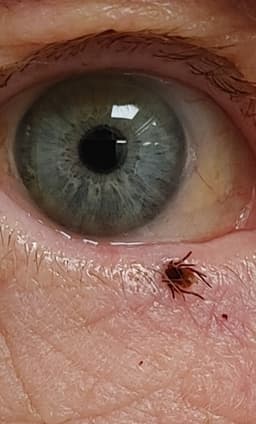
Deer Tick (Black-legged Tick)
Ixodes scapularis
High Risk Risk
Known to transmit: Lyme disease, Anaplasmosis, Babesiosis, Powassan virus
0
Total reports
0
Reports this week
About
The most medically significant tick in the eastern United States. Responsible for transmitting Lyme disease, the most common vector-borne illness in the country. Very small — nymphs are the size of a poppy seed.
Appearance
Dark brown to black body with reddish-brown legs
Size
Adult female: 3mm unfed, up to 10mm engorged
Habitat & Range
Habitat
Wooded areas, leaf litter, tall grass, garden edges, stone walls
Region
Eastern and upper Midwestern US
Peak Season
Nymphs: May–July. Adults: October–May (active above 40°F)
Life Stages
Larva (< 1mm)
Six legs, nearly invisible. Active late summer.
Nymph (1–2mm)
Eight legs, poppy-seed sized. Most bites come from nymphs.
Adult Female (3–5mm)
Reddish-brown, dark shield. Active fall through spring.
Adult Male (2–3mm)
Entirely dark brown/black. Rarely bites.
Safety Tips
- 1.Check skin thoroughly after being outdoors — nymphs are tiny and easy to miss
- 2.Removing within 24-36 hours greatly reduces Lyme transmission risk
- 3.Use fine-tipped tweezers and pull straight out with steady pressure
- 4.Save the tick in a sealed bag with date for potential testing