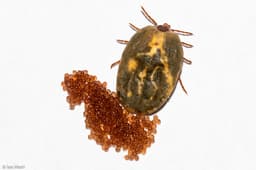
Brown Dog Tick
Rhipicephalus sanguineus
Lower Risk Risk
Known to transmit: Rocky Mountain spotted fever (in Southwest), Canine ehrlichiosis, Canine babesiosis
0
Total reports
0
Reports this week
About
Unlike most ticks, this species can complete its entire life cycle indoors. Primarily feeds on dogs and can infest homes and kennels. Rarely bites humans but is the primary vector of canine ehrlichiosis.
Appearance
Uniformly reddish-brown with no markings
Size
Adult: 3mm unfed, up to 12mm engorged
Habitat & Range
Habitat
Kennels, dog runs, homes, cracks in walls and floors
Region
Nationwide, especially warmer climates
Peak Season
Year-round indoors; summer outdoors
Life Stages
Larva (< 1mm)
Feeds almost exclusively on dogs.
Nymph (1.5mm)
Found hiding in cracks near where dogs rest.
Adult (3mm)
Plain reddish-brown. Elongated body shape.
Safety Tips
- 1.Can survive and reproduce indoors — the only common US tick that does this
- 2.Inspect your dog's bedding and crate regularly
- 3.Professional pest control may be needed for home infestations
- 4.Year-round flea and tick prevention for dogs is essential